
Shelley Whitehead
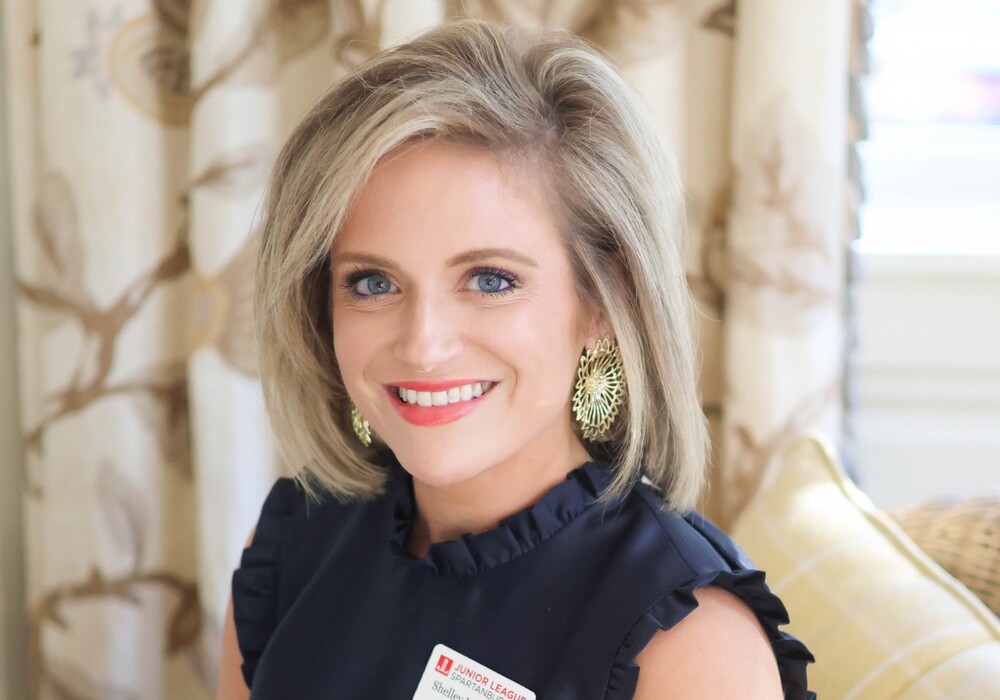
Shelley Whitehead likes to decribe her life as “a bunch of happy accidents” that have led her down a trail entirely her own — a trail defined by experimentation, creativity, and discovery.
A Spartanburg native, Whitehead says that despite always wanting to pursue a career in science, she fully embraced the liberal arts during her college years. “I double majored in biology and English at PC [Presbyterian College], and also did a minor in film studies. People thought it was so odd, but I thoroughly enjoyed it, and I think that’s one of the beauties of going to a liberal arts school. You can really study whatever you want.”
When she was ready to graduate with her bachelor’s, Whitehead was deep in the trenches of deciding what should come next. Initially, she’d planned to go to medical school, but a conversation with her uncle — a cancer specialist — made her pause.
“He said, ‘Medicine isn’t what it used to be,’” says Whitehead. “‘It’s really changed, and it’s a lot of paperwork, and you don’t get that quality time with your patients anymore. I just want to make sure you really know what you’re signing up for.’”
At her uncle’s recommendation, she pivoted to first pursuing a master’s degree. “My interest was in parasitology and infectious diseases, and I really enjoyed tropical medicine,” she says. “I found that Tulane in New Orleans was the only school in the United States with a degree in tropical medicine at the time, so I applied to just one school, got in, and moved to New Orleans on my 22nd birthday.”
It was a decision that would shape the rest of her career. Whitehead completed a degree in public health, and absolutely fell in love. “My uncle was right,” she says. “I had a love for something else.”
While at Tulane, Whitehead realized that she wanted to work with infectious diseases rather than go into traditional medicine. In her final semester, she happened to take a class in medical entomology.
“I knew that a lot of tropical diseases are spread by insects, so I figured I should study the insects themselves, even though I wasn’t crazy about insects,” she says. “And it just really clicked. It was like in A Beautiful Mind — I could just see it all, everything made so much sense to me.”
Whitehead ended up spending an additional year in New Orleans after graduation doing field work with her entomology professor. From there, she was encouraged to get her PhD in entomology. “I applied to Penn State,” she says, “and again, it was the only school I applied to. But I got in.” During her time at Penn State, she focused her studies on human malaria and a Southeast Asian mosquito vector.
“I feel like I’m a walking contradiction in a lot of ways,” says Whitehead. “I like to say that yes, I’m an entomologist, but I’m more specifically a medical entomologist.” While she loves her field of study, her life is not filled with bugs and creatures of all kinds — when presented with a beetle-collecting hike or a good face mask, she’ll choose the face mask every time. “If you ask me about a cockroach, or a beetle, or a bee, I’ll tell you to ask somebody else,” she laughs.
“Life just kind of worked out,” she says. “I said yes to a lot of opportunities that I wouldn’t have known about if I’d stuck to medical school, and I never would have otherwise realized that I had this very niche interest, and that I was good at it.”
After graduating with her PhD, Whitehead took a job on the Gulf Coast of Florida, working as a scientist for a mosquito control program. From there, she took what she learned and started her own business, working as a consultant with organizations like the University of Florida and Leading Edge Aerial Technology.
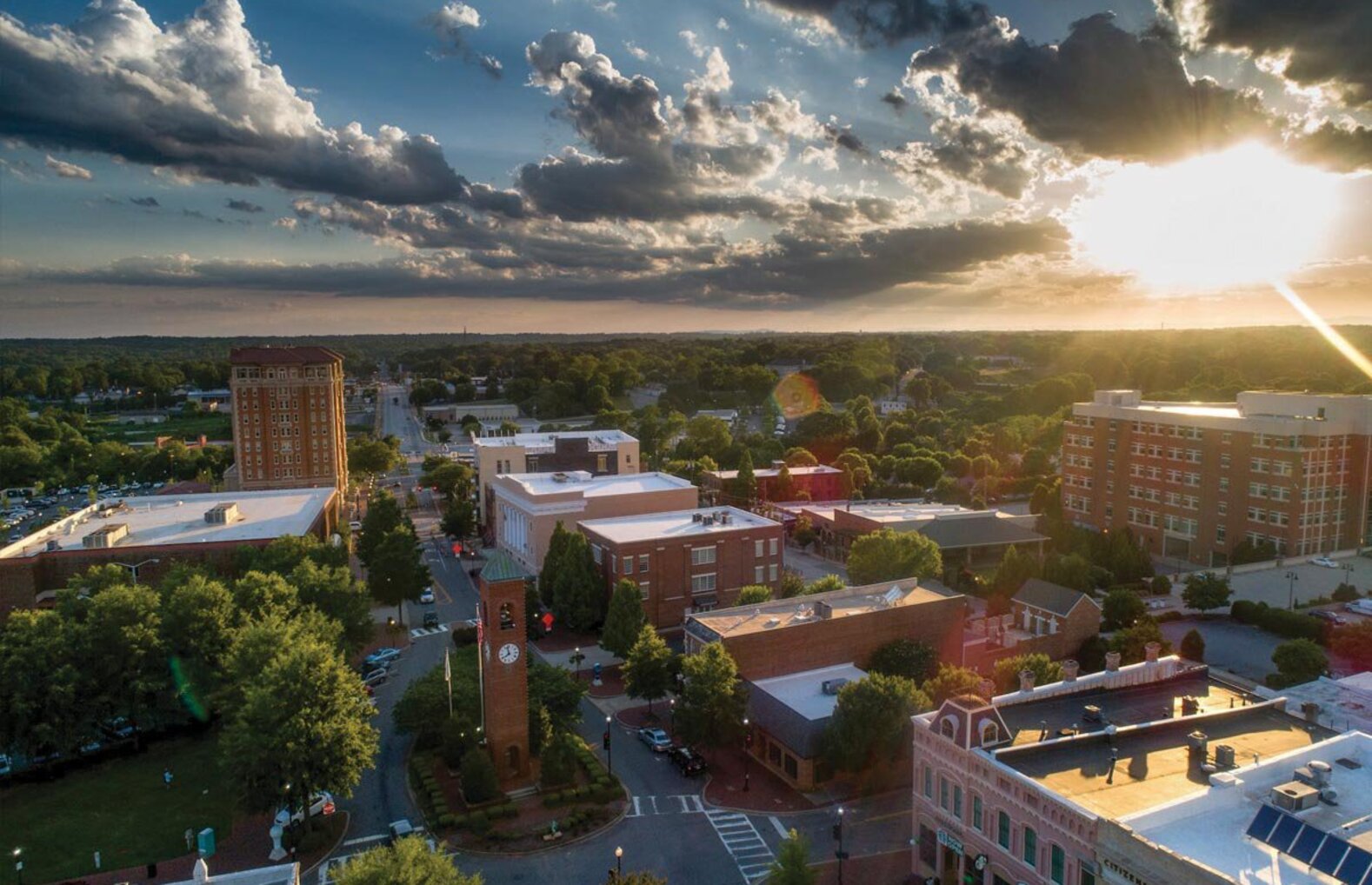
Currently, she serves as the Executive Director of the Floriday Mosquito Control Association, and also took on a position as the Technical Development Manager for Azelis Agriculture and Environmental Solutions. And while one might think that working in the mosquito industry would require someone to live in a tropical destination like Florida, Whitehead works from her home base right here in Spartanburg.
Whitehead moved back to the Upstate in 2022, and says it’s been the best decision for her family. “My husband and I have three-and-a-half-year-old twins, and I could not imagine raising them anywhere else,” she says.
While she travels frequently, she’s able to work primarily from her home office. And if she needs a lab? She doesn’t have to go any farther than her own backyard.
“I inherited my grandparents’ house, and grandfather had what we called ‘the miniature house,’ where he kept his tools,” she says. “When we moved back, my husband helped me construct a room within that little house where I can keep my mosquitos and have an insectory. I’m able to fully control the humidity, the temperature, everything I need. I could probably have close to 300,000 mosquitos if I wanted to.”
It’s work she greatly enjoys. “I love the variety,” says Whitehead. “Having gone to school for both biology and English, I clearly enjoy using both sides of my brain. And with my work, I’m not doing the same thing every day. Sometimes I’m doing traditional science work, and sometimes I get to be creative on the marketing side of things. I even do a little event planning. No two days are the same, and I love that.”
Whitehead is also grateful to do work that she knows makes a difference. “Public health is so important, especially now,” she says. “This year has been a particularly bad year for West Nile virus, and being able to give advice to and provide solutions for different mosquito control districts dealing with these problems is really gratifying.”