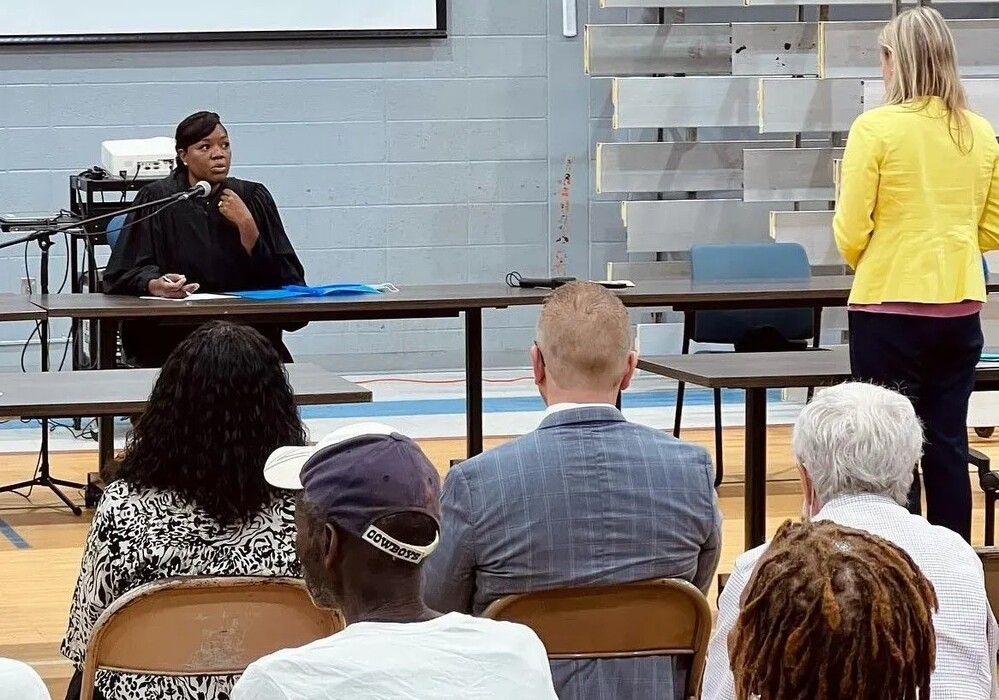

Homeless Court is one of the most important factors to looking out for people experiencing homelessness. Photo courtesy of A Place To Call Home
Editor's Note: This is part three of a three-part series. To read the first two articles in the series, please find them under the 'News' tab near the top of the home page.
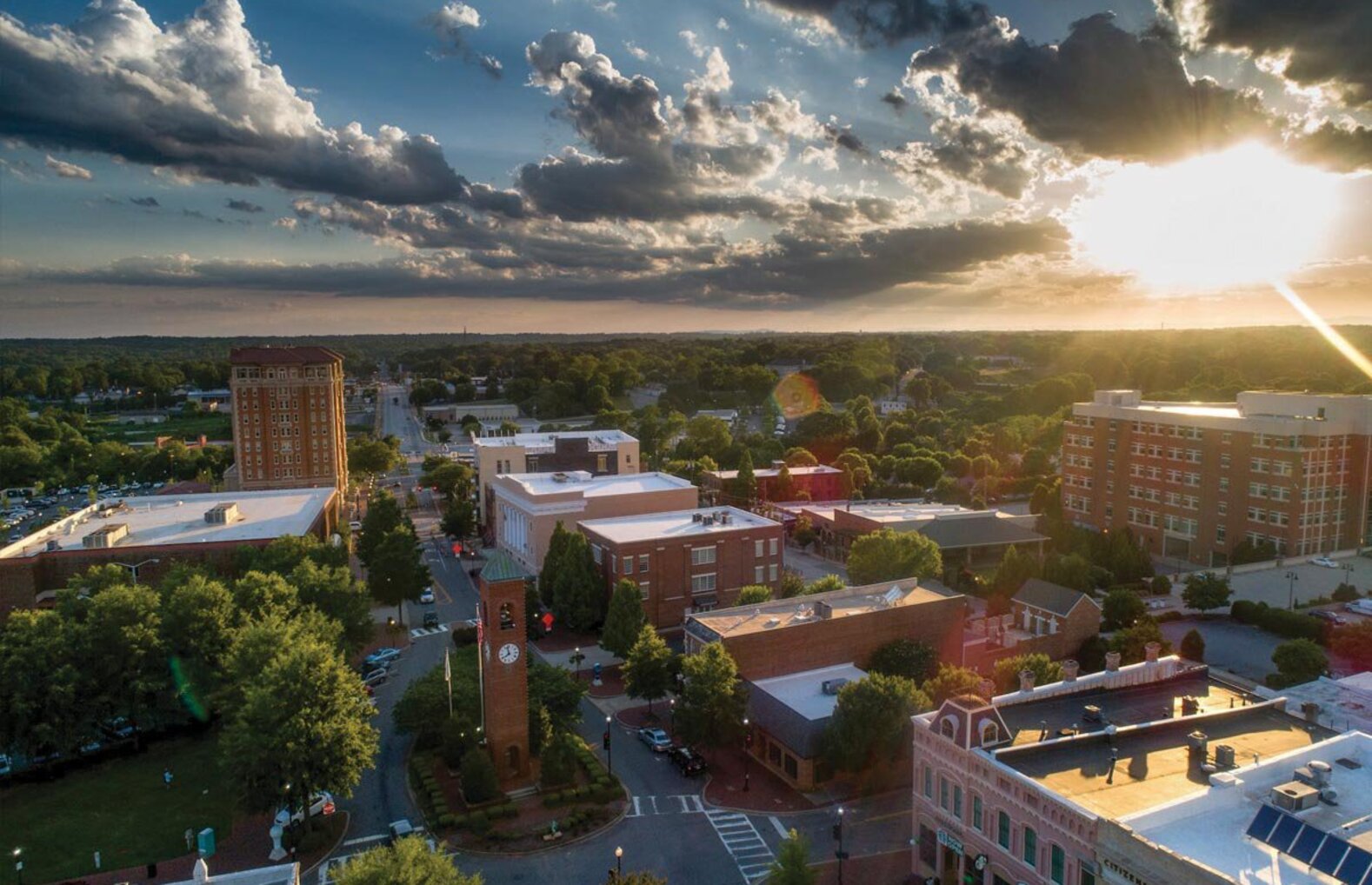
The next time you see a homeless person in a public place in Spartanburg, unless they are carrying a sign asking for help, walking the street with luggage, or pass you in a too-packed vehicle reminiscent of the 1940 movie ‘The Grapes of Wrath’, odds are you won’t ever suspect that they are homeless.
Because homelessness now includes many working people only one paycheck or big life event from losing even a basic apartment due to increased rents and unattainable housing costs.
Committed efforts are underway by many individuals in local groups such as Miracle Hill Ministries, Invisible Ministries, Upstate Continuum of Care, and A Place To Call Home (APTCH) to eventually wipe out the problem.
But the only reason their efforts have even a chance to succeed is because enough people wanting to get involved in community service have chosen this area to lend a hand.
“The volunteer sees firsthand that homelessness is not ugly or shameful,” said APTCH manager Beth Rutherford, who has worked with the homeless for over 20 years. “I often have people comment to me, after their first time volunteering, that they never fully understood the barriers that the homeless face.”
She also pointed out that the biggest barrier on either side of the equation is getting people to volunteer the first time. But once on board, new people tend to continue on regular basis, rather than quit or only help out once in a while, because they get to see “up close that homelessness can happen to anyone.”
“Not one person is immune to this issue,” Rutherford said. “We have been painted a picture of the stereotype of a homeless person or family – and when the volunteer meets that person/family, they realize that we all look homeless. The volunteer understands why people get into that situation, thus driving the need to continue to volunteer.”
Without this kind of personal support, Rutherford and others involved in the day-to-day work would have an all-but-impossible challenge to secure necessary funding, temporary and permanent shelters, assistance from other agencies, and, dating back to our earliest civilizations, a change in public perceptions.
For example, consider area crime.
In 2024, Washingtonian researchers with think tank R Street Institute posed this question: Do homeless populations pose an increased risk to public safety?
The same year, researchers with the National Institutes of Health in Bethesda, Mary., noted that multiple states have begun passing legislation attempting to criminalize homelessness.
But the NIH researchers also concluded that people experiencing homelessness are ‘more likely to be victims of crime than perpetrators.’
And the R Street Institute reached the same conclusion, determining that while homeless individuals ‘account for a small percentage of overall crime,’ they are more often victims of crime.
“I would not say that there is any direct correlation between crime and homelessness in Spartanburg County, at least not that we are able to track,” said Lieutenant Graham McLellan, public information officer with the Spartanburg County Sheriff's Office and Detention Center. “Our arrest numbers have remained fairly consistent, around 6,000 per year. And since our population has grown, that would indicate that crime rates have dropped.”
And APTCH director Hannah Jarrett, explained that changing people’s approaches to homelessness on just this one point alone becomes harder every time someone sees a person “living their private lives in public spaces.”
“Activities that would normally happen inside a home – sleeping, resting, arguing, using the bathroom, or managing a crisis – may happen in public when someone has nowhere else to go,” Jarrett said. “That visibility can create the perception that homelessness and crime are more closely connected than they actually are. That does not mean people experiencing homelessness never commit crimes. But it does mean we should be careful not to generalize an entire population based on isolated incidents. Violent crimes involving people experiencing homelessness also tend to receive more public and media attention because they are unusual, visible, and emotionally charged.”
Both she and Rutherford said the best way for someone to make up their own mind about the issue is to become involved in trying to solve the problem.
To this end, there are many different ways to volunteer:
• Path to Resources. This first step is the easiest and the hardest: Call the APTCH homeless engagement response team at 864-591-4417, and ask how what you can do.
• Choices. Whether you are just civic-minded or a professional who can offer specific services, APTCH involvement includes HEART, Homeless Court, the Wellbeing Care Community which connects behavioral health and housing services, Habitat for Humanity, and Weekly Situation Table meetings that bring agencies together to identify and triage high-risk cases.
Other services include food pantry, maintenance, transportation, store pickup, prayer team, tutoring, childcare, move-in support.
• Donations. If you aren’t sure yet where you might want to start, you can always donate money until you’re ready.
And remember that any effort you make carries no guarantee: the homeless problem could still be here 100 or even 1,000 years from now.
But if the people with APTCH have anything to say about it, they may yet become the model to solving a problem that isn’t going away gently.
“No matter how many volunteers we have or we may lose, our work continues to provide the best support we can for those experiencing or facing homelessness,” Rutherford said. “We will never be able to end homelessness. But if we have the measures in place for people not to be homeless, we can go a long way to almost ending it. And we’re getting closer.”