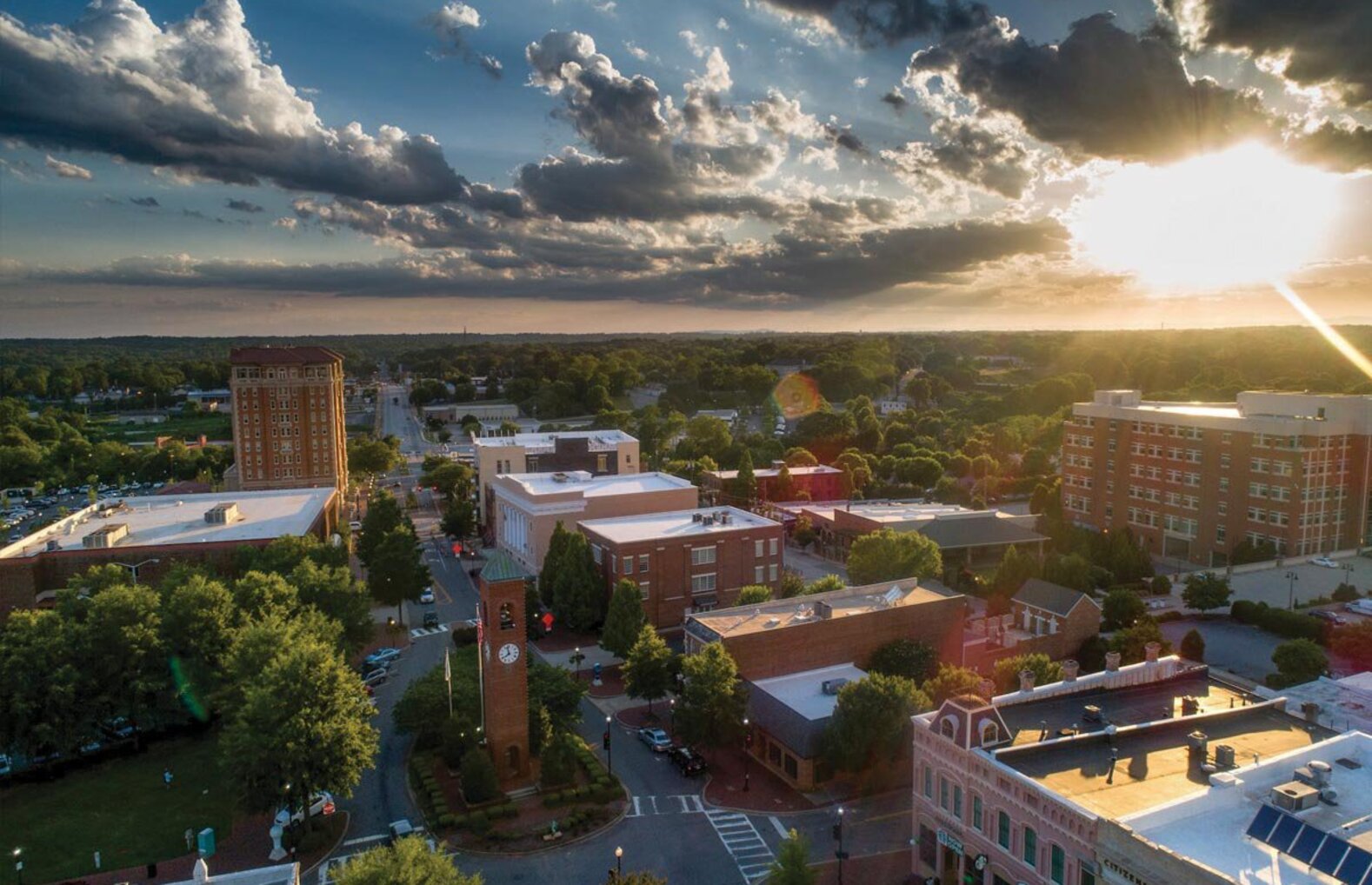
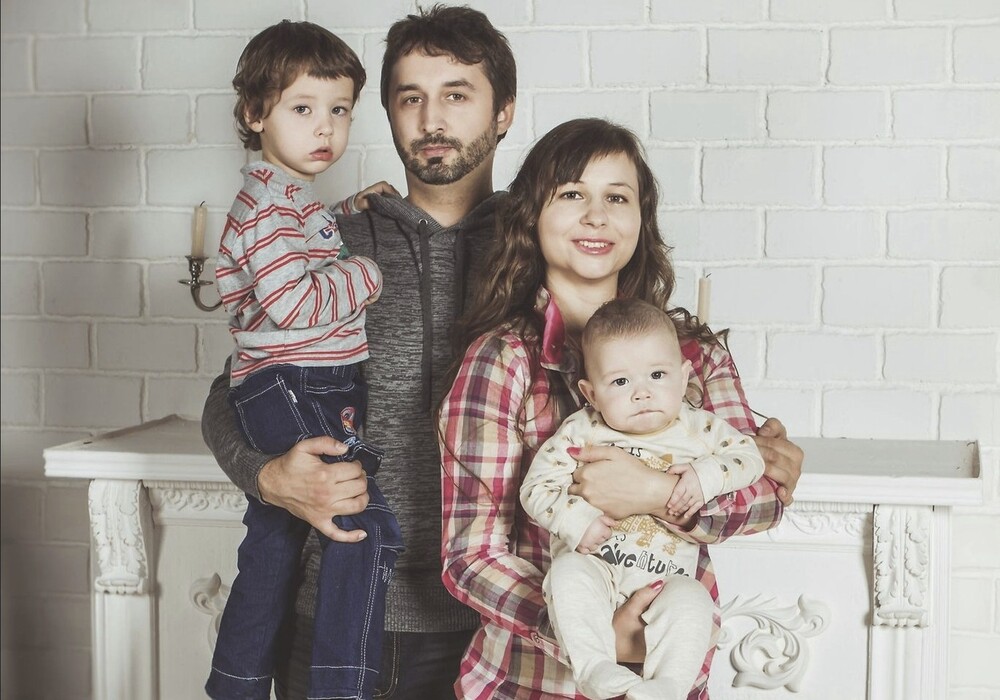

Many working families in Spartanburg and across the U.S. who are not homeless now live under the threat of homelessness. Photo courtesy of A Place To Call Home
Editor’s Note: This is the second story in a 3-part series
In a 1992 monologue about Americans’ obsession of declaring war on things we don’t like, legendary comedian George Carlin said, “We got a war on poverty, the war on crime, war on litter, the war on cancer, the war on drugs. But you ever notice: There's no war on homelessness… You know why? There's no money in that problem.”
While Carlin might be surprised to know that we do have a war on homelessness now, that problem, having been around since Colonial days, comes with a ton of obstacles: ample manpower, available funding, affordable housing, temporary sheltering, and a lot of individual belief that the war can be won.
But year after year, the most critical obstacle to overcome by the people fighting the war is public perception – and to stand even a chance of solving this problem in Spartanburg County, area leaders and frontline volunteers are trenching in an uphill battle to change people’s minds about homelessness by the end of the decade to a view that has never before been in place.
“Changing public perception is an important part of this work,” said Hannah Jarrett, executive director of A Place To Call Home, a county-wide initiative formed in 2025 to provide homeless assistance in many ways. “Many view homelessness as a personal failure, when the reality is that it's driven by much larger forces: rising housing costs, gaps in healthcare, job instability, and an inadequate safety net.”
Every month, and sometimes every day, these forces, whether separate or combined, constantly tend to defeat all efforts to handle homelessness before any long-term progress can be realized.
But in only the last year, APTCH members and people in local allying groups have made noticeable strides in many key areas, including these three:
• Shelters. Across the U.S., homelessness is at an all-time historical high. The Washington, D.C., non-profit National Alliance to End Homelessness estimated that the number of homeless people from Maine to Hawaii increased from 653,104 in 2023 to 771,480 in 2024.
But besides all the tangible reasons Jarrett mentioned for the increase, the biggest and most invisible factor is the threat of homelessness.
For example, the number of homeless shelters in any form, as determined by global market research firm IbisWorld, stands at approximately 14,000 nationally, – up from the U.S government’s count of 10,600 in 1990 – more than at any time in the country’s history.
And rather than just more street bums and tramps than before, the dynamic now includes many working people living on the edge of homelessness because of housing costs that have priced them out of affording even a basic apartment.
“In the Upstate, we have the highest rate of family homelessness in all of South Carolina,” said Colin Bauer, licensed independent social worker with Spartanburg School District 7. “In Pickens County alone, there are over 2,600 children living in homelessness. In Spartanburg, as of mid-May, we had over 1,400.”
So far, APTCH operates one of only two family shelters in the state. The other is run by Homeless No More in Columbia.
“People also stay in churches, hotel rooms, substandard housing where there is no electricity or running water, with other family members in which two or three families might be living together, young adults couch-hopping from place to place, and the Hope Center for Children transition living program for ages 16-22,” Bauer said. “We have quite a few teenagers who have been kicked out of the homes by mom and dad, or who have fled an unsafe home.”
And Jarrett pointed out that because shelter and area growth are closely connected, “housing must be treated as part of the economic development strategy.”
• Manpower. While APTCH currently utilizes 400 volunteers and 10 staff members to operate the family shelter, represent people in Homeless Court, and care for people in a variety of daily community outreaches, they are only one group of Spartanburg individuals fighting the war on homelessness.
Some you know – such as United Way, Miracle Hill Ministries, Salvation Army, and Continuum of Care, which coordinates efforts in 13 Upperstate counties.
But others operate in ways that you likely never notice – such as Jamie Mintz, founder of Invisible Ministries.
Begun out of a Bible study group in 2014 as a community outreach, Mintz funded the effort out of his own pocket until 2023, when “my group of volunteers pushed me into becoming an official non-profit.”
“We serve a meal on private property every Tuesday – all word of mouth – and the weather does not affect whether we show up,” Mintz said. “We averaged 50 people a week in 2025, now it’s in the 70s. And even in the pouring-down rain last Tuesday (May 26), we had 25 volunteers show up – and not one did I have to ask to come join us.”
He and Jarrett added that while the number of volunteers in any group constantly varies, anyone who takes the first step to lend a hand in any capacity will likely want to continue.
“We moved 30 people into housing on April 1…and that was no joke,” Jarrett said.
“There was a family of six or eight who had been living in a suburban. And to see those children walk into an apartment and have their own bed… It would have brought tears to your eyes.”
• Money. Prior to the creation of APTCH, the money needed to reduce homelessness in Spartanburg County was a moving variable at best.
Funding from U.S. Dept. of Housing and Urban Development through the Upstate Continuum of Care, amounted to only 2.4% of available money – despite Spartanburg being the second-largest county in the Upstate.
“The primary reason was the absence of a coordinated local applicant with the capacity to actually manage those funds,” Jarrett explained. “There was no organized entity positioned to pursue or administer them. APTCH was built, in part, to close that gap.”
In just its first year of operation, APTCH received $3.5 million from federal grants, state grants, local government funding, private philanthropy, corporate partners, and individual donors. And the UCC portion has increased so far to 17%.
“It's a diverse funding base because it's important to us that we are not dependent on any single source,” Jarrett said.
And in addition to funding shelters and all the services APTCH provides, Bauer indicated that the money also brings a hidden value of stress relief for those in need.
“It’s a lot of upheaval for them day after day,” he said. “If you’re a homeless student, how do you even think about school when you don’t know where you’ll be spending the night? These are the invisible homeless, the ones you never see. But they’re there. Right in the middle of all of our county’s prosperity.”
And by 2030, Bauer, Jarrett, Mintz and the people who serve as volunteers are hoping that their work will narrow the gap between the people who have helped create this prosperity, and those who are trying to gain a toehold in it.
“It is difficult to change perception when we have social media outlets that portray homelessness as something shameful and self-inflicting,” said APTCH manager and longtime homeless worker Beth Rutherford. “Instead of turning a blind eye, we, as a community, need to be open to help change the narrative.”
Next week: Getting Involved, Wiping Out The Problem?