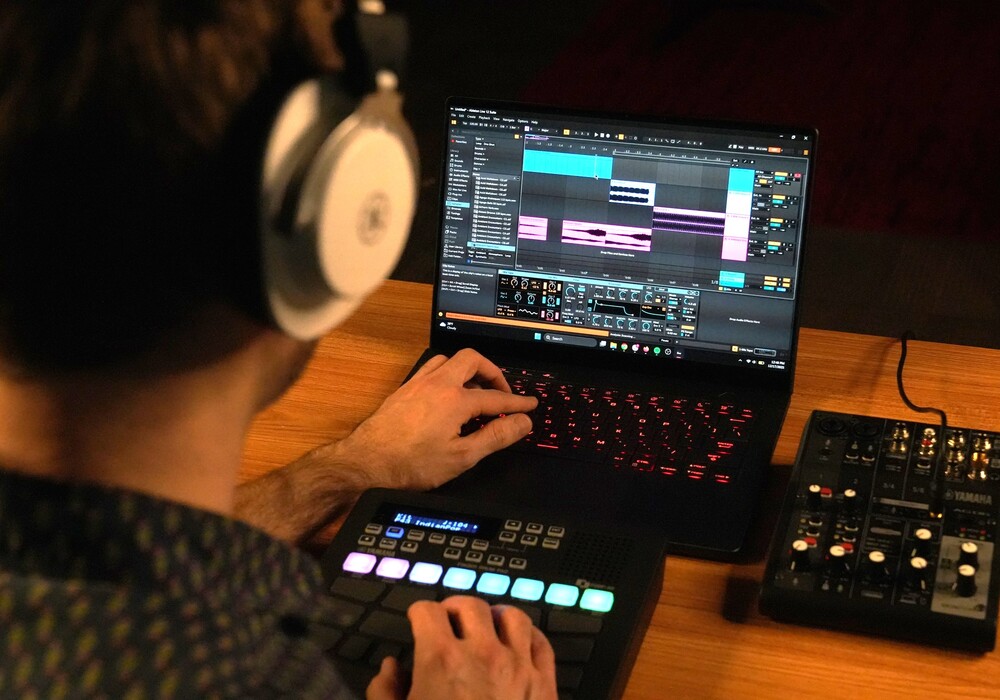

Spartanburg High School students, under the direction of Dr. Kenneth Tice, are participating in a pilot program that introduces them to the world of music production using a program called Build-A-Band. Build-A-Band photo
Pretend you are touring a professional music studio in Chicago, Nashville, or Philadelphia while a top band is recording an album, and you imagine yourself at the control panel behind a big glass screen putting your expertise and touch on every song.
This kind of vision could soon start to become real for students at Spartanburg High School with the introduction of a new music program called Build-a-Band.
Piloted by district superintendent Jeff Stevens, Build-a-Band allows students who are interested in the production side of music a start to learning how to compose, produce, and publish original music with all possible industry tools used in professional studios.
Anticipation for the offering is already running high, as district officials are not only hoping the program will become a permanent course, but potentially a new profession for students to pursue.
“We do some music technology courses, and I thought it would be good for students interested in the production or writing side of music,” said Dr. Terry Pruitt, chief academic officer with Spartanburg School District 7. “This kind of training helps them learn how to do that, and we will start right after the holidays.”
The Build-A-Band idea began forming last spring when Stevens introduced Pruitt to Shaun Masavage, CEO of Zealot Interactive in Buffalo, N.Y., who developed the online program and curriculum in 2022 to bring new technological advancements to music education.
Masavage and Pruitt then sifted through a slew of details and chose music teacher Dr. Kenneth Tice for initial instruction.
“The platform was purchased to be used in an honors or advanced music technology class,” said Dr. Tice, now in his 23rd year of teaching music, and 4th at Spartanburg High. “We will pilot some of the features in the spring semester, in hopes of offering the class next school year.”
For example, suppose during your visit to the professional studio, you had the chance to sit in the control room during an actual production and make any changes that you think would improve the sound of the recordings.
Where would you place microphones to best capture the intended sound?
How many microphones would you need?
What recording levels would best suit the band in studio?
What would be the order of your plug-ins for signal flow to ensure the highest sound quality possible?
Would you add any studio sound effects not supplied by the musicians?
And would you suggest recording the vocals, bass, guitars, drums and any other instruments separately and mixing them later? Or would you record them altogether to capture as much of the original sound as possible?
“Music production is complicated and involves so many different facets of knowledge ranging from technical with Digital Audio Workstations to legal and copyright law,” Masavage said. “Our program covers everything at a level to give students the confidence to go out into the world with their creative works and feel supported.”
Spartanburg High is the first high school in South Carolina to adopt the Build-a-Band program – but six other school districts have shown interest.
So far, 10 students have signed up, with room for five more – and if the program takes off as hoped, demand might soon outpace supply.
“We want to see how it goes for a couple of semesters and evaluate it for the future,” Dr. Pruitt said. “But the training, using this technology, can help students learn what music production is all about without replacing musicians.”