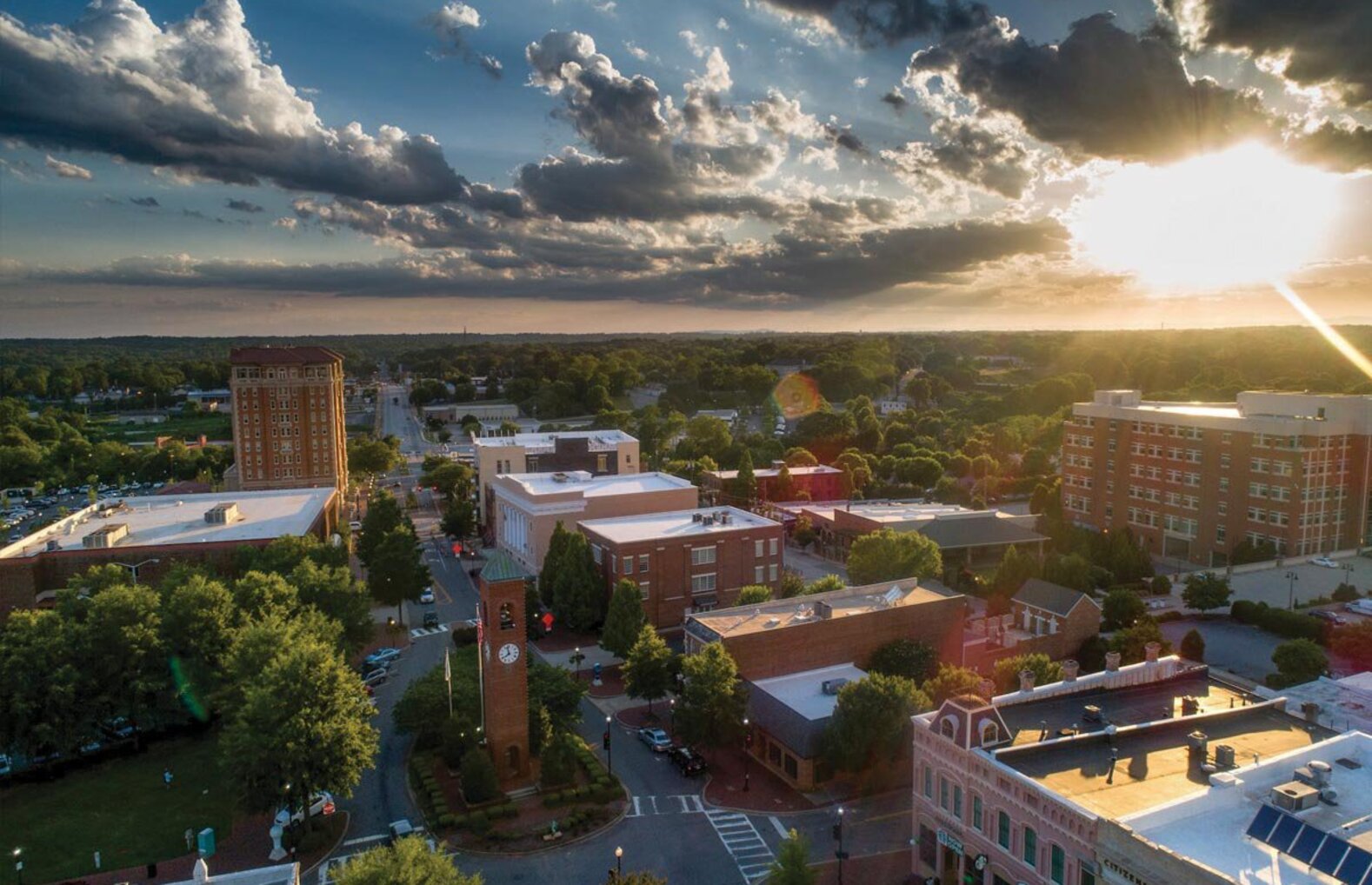
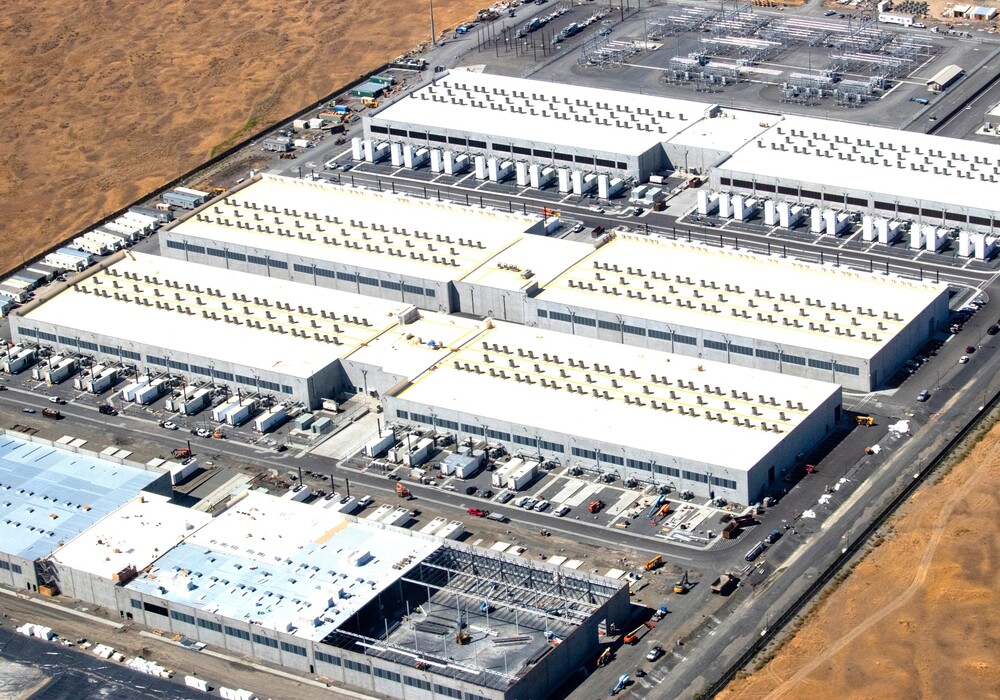

The 100-acre AWS Data Center in Morrow County, Ore., operating with more than 850,000 square feet of space in four buildings, is an example of what Spartanburg County residents are opposing until specific guidelines for future data centers in South Carolina can be developed within the state legislature. Photo courtesy of Teddar
While data centers may indeed be the wave of the future in the U.S., they won’t be coming to Spartanburg County anytime soon – and not just because a recent proposal was defeated at the grass roots level.
The state legislature in Columbia has two bills underway to assess best regulatory practices for centers wanting to locate in South Carolina, and a local House representative has also filed a temporary moratorium to last through all of 2027.
Which means that until state lawmakers pass specific rules governing these centers, South Carolina – and especially Spartanburg – is likely to be off-limits to any further proposals for perhaps the rest of the decade.
“County Council will not vote on anything else related to new data centers until the state legislature establishes a statewide set of rules, protocols, and safeguards to uniformly evaluate these projects,” said Spartanburg County Council Chairman A. Manning Lynch at a Feb. 26 press conference.
His comment came one day before the seven members of County Council unanimously defeated a third-reading ordinance for two Fee-In-Lieu-Of-Tax agreements to authorize a proposal by AI developer TigerDC to locate a $3 billion data center, known as Project Spero, in the county.
The company withdrew the proposal earlier the same day, after vocal county residents led a fierce two-month battle to stop the project. The third-reading decision reversed two earlier approvals by the Council, and hinged on issues regarding project transparency; lack of consistent, specific information on project plans; the number of megawatts to be used; and the amount of water to be used.
“It was great to see the public show up in a big way,” said Emily Poole, an Upstate staff attorney with the South Carolina Environmental Law Project. “They were angry with how this specific process worked.”
While residents spoke both for and against the project, one objection during a special press conference Feb. 25 came from resident Courtney McClain, who pointed out that the state legislature currently has two committee bills – H4583 in the House and S867 in the Senate – which in part are focused on data center regulation, and the establishing of an advisory committee to ensure protection for any state community where future data centers might want to locate.
“Let these bills pass through the House and the Senate so that proper regulations can be set in place to protect us,” McClain said.
The same day, state Rep. Steven Long, R-Spartanburg, District 37, filed a joint resolution for a temporary moratorium on new data centers until Jan. 1, 2028.
“There is not enough time in the legislative session this year to do a deep dive and come up with something that works for our state,” Long said.
He added that while “data centers are the reality of the 21st century,” there are too many resident concerns and questions that need to be answered and studied to “ensure we are protecting taxpayers, ratepayers, and our communities with any policy we enact.”
“This (moratorium) will give us the time we need to better understand the issue and what the appropriate regulatory framework should look like,” he said.
And South Carolina is not the only state with concerned residents about the growth of data centers.
For example, based on 2025 estimates by the Environmental and Energy Study Institute in Washington, D.C., the number of centers in the U.S. stand at 5,426 and counting – with Northern Virginia topping the list with more than 300.
Communities in Missouri, Arizona, Georgia, Wisconsin, Virginia, Pennsylvania, and North Carolina have protested proposals for much the same reasons as residents in Spartanburg.
But since the presence of these centers will continue to grow, Poole said now more than ever, people need peace of mind and certainty about where they should be built and how they will tend to affect surrounding communities.
“South Carolina doesn’t have to choose between innovation and protection,” she said. “We just need to be sure that as these centers are coming, they need to follow lawful processes that give a voice to the public.”