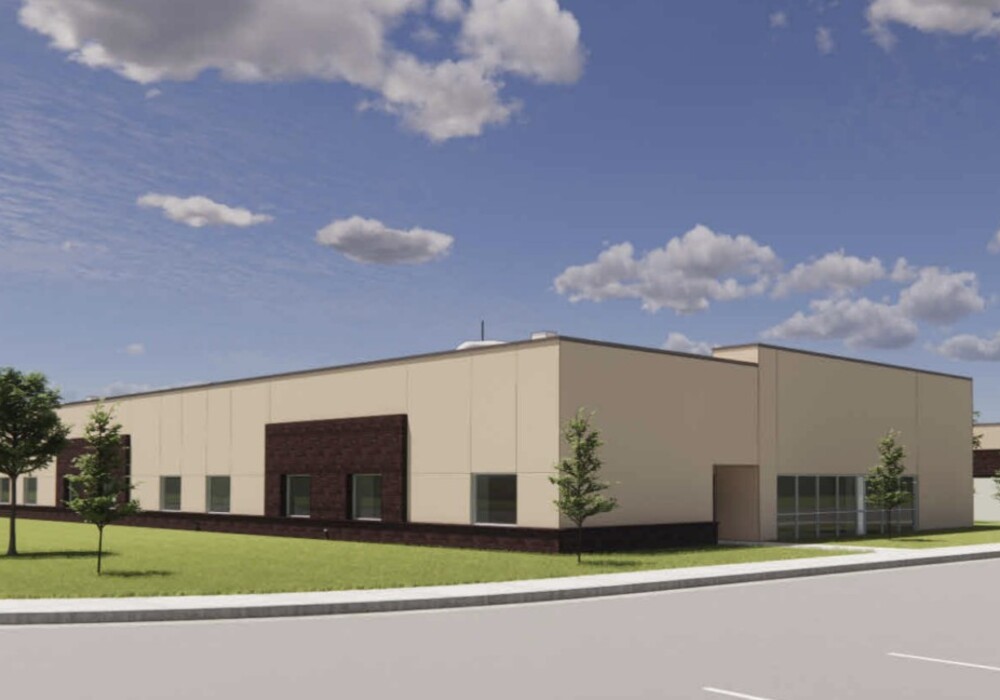

Hospital expansion rendering.
As health care across the U.S. continues to rise at a precipitous pace, Spartanburg Rehabilitation Institute is preparing to meet the growing demand for all of its Upstate services with a new $10 million, 20-bed expansion this autumn at its North Grove Medical Park facility.
The addition will not only allow doctors and nurses to treat more people, but to care for more inpatients needing comprehensive recovery from physical disabilities and chronic illnesses.
“Over the past two years , SRI has seen a 10% year-over-year rise in admissions for stroke, orthopedic, and medically complex patients,” said CEO Richard Schulz, who has been with the institute since its opening in 2013. “Many Upstate residents currently face limited access to high-acuity rehab care close to home. We anticipate this expansion to allow us to serve our community at a greater scale while continuing to deliver the same high-quality outcomes.”
Construction is expected to start in October and finish in June 2027.
Once completed, the expansion will bring SRI’s patient capacity to 60 private rooms, and enlarge its therapy gym to 6,900 square feet – slightly less than a standard size baseball infield – to accommodate more equipment and rehabilitative technology.
“The new space allows SRI to serve more patients with individualized therapy intensity, advanced equipment, and interdisciplinary support – helping them recover faster and return to independence sooner,” Schulz said. “A physician-led interdisciplinary healthcare team works with patients and family members to create individualized treatment plans focused on maximizing recovery and independence.”
SRI currently serves more than 1,200 patients annually. The biggest treatment needs include:
• Comprehensive rehabilitation for strokes, brain and spinal injuries, neurological disorders, orthopedic conditions, amputations, Parkinson’s disease, and both occupational and speech therapy tailored to each person’s condition and goal.
• Continuity of care, as many patients transition from acute hospitals, and
require communication between providers to ensure safety and progress.
• Emotional and motivational support – which Schulz pointed out is almost as important as the treatments themselves.
“Recovery is not just physical,” he said. “Patients need encouragement, education, and family involvement to rebuild confidence and quality of life.”
And all the needs connected to what SRI offers are only expected to go up as the nation’s 65-and-older population keeps rising to unprecedented levels.
For example, researchers associated with the National Institutes of Health in Bethesda, Mary., reported that as of July 2024, over 1.2 million Americans resided in one of the nation’s 14,827 certified nursing homes.
https://idm.publichealth.uga.edu/staff/austin-dobbs/
AND
https://pmc.ncbi.nlm.nih.gov/articles/PMC12138329/
And the U.S. Census Bureau is projecting older adults to outnumber children by the year 2035 for the first time in U.S. history – meaning that the already huge need for dedicated senior care in all forms is only going to increase.
“Additional nurses, therapists, and support staff will be hired to ensure we continue delivering the highest level of post-acute rehabilitative care,” Schulz said. “We’re not changing who we are. We’re increasing our ability to meet the growing demand for specialized inpatient rehabilitation in the Upstate.”